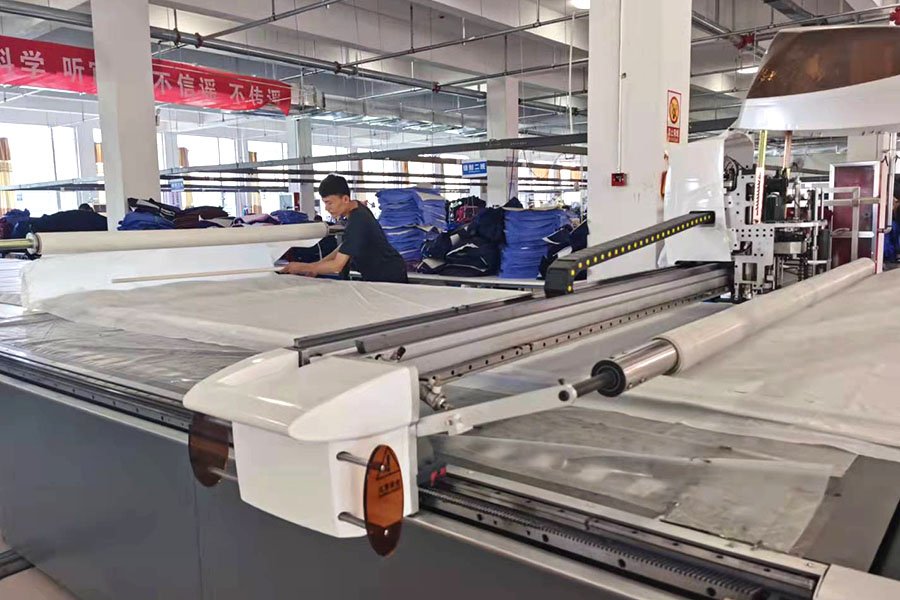
A direct window into our primary manufacturing lines, presenting medical scrubs, chef uniforms, and protective healthcare apparel tailored for US, Australian, and EU compliance.
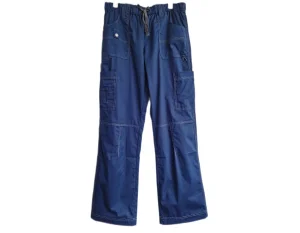
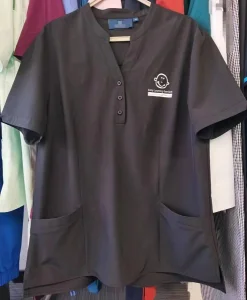
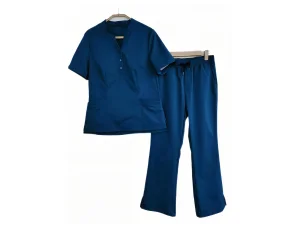
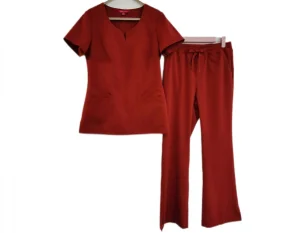
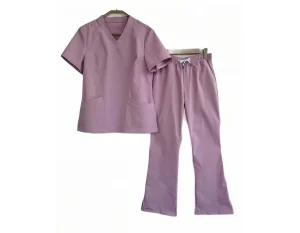
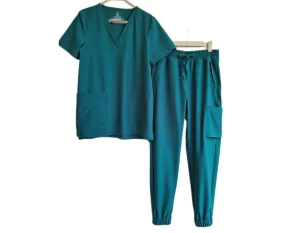
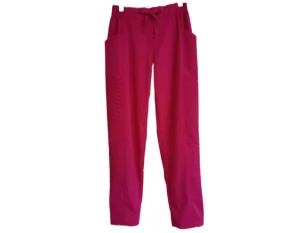
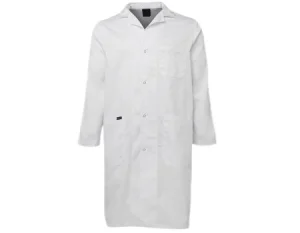
Established in 2014, E-SONG apparel has grown to become a premium, highly trusted manufacturer of medical uniforms, hospital aprons, and professional chef uniforms. Headquartered in Shandong Province, North of China, our operational hub in Linyi City supports robust international supply chains, serving primarily the highly regulated markets of the United States and Australia.
To ensure absolute production resilience, our footprint encompasses a wholly owned core facility in Linyi City employing 120 skilled garment workers, running alongside two strategically integrated, subcontracted partner factories. This diversified layout enables us to optimize different lines for distinct fabric properties and specifications—eliminating cross-production bottlenecks and ensuring a total production capacity of 300,000 units per month.
We operate with a simple ethos: "Quality is the life of an enterprise." Our dedicated engineering and research division works aggressively to materialize complex client demands, offering rapid sampling protocols completed in under 3 business days and dispatching full-scale bulk orders within 20 to 45 days.

From simple fluid barriers to smart antimicrobial solutions, understanding the global demands for modern hospital aprons.
Hospital-acquired infections (HAIs) present a multi-billion dollar liability globally. The hospital apron serves as the frontline mechanical barrier between clinicians and fluid-borne pathogens, requiring rigorous fluid repellency ratings.
Global environmental initiatives are forcing healthcare procurement to transition from disposable plastics to durable, sanitizable, reusable aprons. This requires high-performance textiles that withstand intensive industrial laundering cycles.
E-SONG engineers aprons utilizing hydrophobic finishes combined with breathable membranes, optimizing clinician thermal control while simultaneously ensuring compliance with local biological safety guidelines.
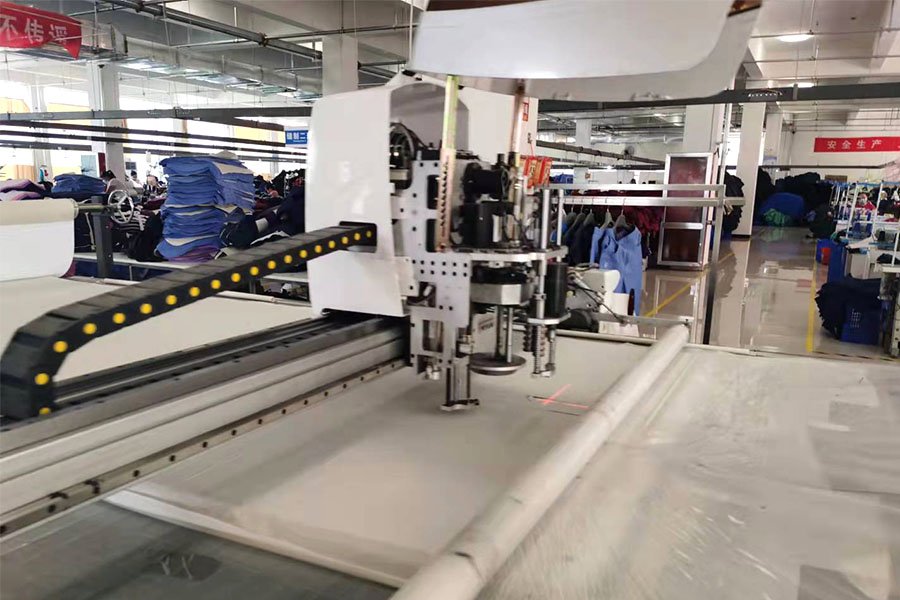
At E-SONG apparel, we analyze protective garments down to the polymer structure. Our production processes optimize four key fabric classifications specifically tailored for distinct risk levels and ergonomic requirements inside hospital grids:
| Fabric Blend | Common Weight (GSM) | Hydrophobic Rating | Tensile Strength (N) | Recommended Clinical Area |
|---|---|---|---|---|
| Polyester Rayon Spandex (4-way) | 160 - 210 GSM | Level II - Fluid Repellent | > 480 N | Emergency Rooms, ICUs, Active Ward Care |
| TC Poplin (65% Poly, 35% Cotton) | 145 - 180 GSM | Level I - General Protection | > 520 N | Outpatient Clinics, General Practitioner Offices |
| Impervious Polyurethane Coated Twill | 220 - 260 GSM | Level IV - Full Impervious | > 650 N | Pathology Labs, Autopsy Rooms, Trauma Units |
| Poly Cotton Spandex | 175 - 200 GSM | Level II - Balanced Repellent | > 500 N | Institutional Food Preparation, Kitchen Facilities |
A key failure point in medical supply chains is the inability of garment manufacturers to rapidly deliver accurate mockups. At E-SONG apparel, we eliminate this friction. By maintaining dedicated sample lines and specialized technical pattern-makers, we guarantee the output of custom samples within 3 business days.
1. CAD Design & Ergonomic Engineering: Our designers utilize advanced modeling software to construct patterns that align with biomechanical movement, minimizing seam tension in critical zones such as the shoulders and lower back.
2. Material Matching: We pair the blueprint with custom fabrics, ensuring compliance with specified thermal, wash-life, and mechanical stress parameters.
3. Factory Testing Phase: Once constructed, prototypes undergo rapid stress-testing, simulating structural pulls, wash cycles, and fluid penetration to ensure resilience.
4. Precision Mass Production: After sample authorization, Linyi's production infrastructure begins processing with full traceability. Deliveries are completed reliably within 20 to 45 days.
How our hospital aprons and protective wear adapt to global healthcare directives and environmental guidelines.
We manufacture in accordance with US Food and Drug Administration guidelines and ensure our products meet standard ANSI/AAMI PB70 classifications, ensuring protection level reliability across American medical systems.
Understanding the Australian Therapeutic Goods Administration (TGA) framework, our fabrics comply with microbiological penetration tests and thermal comfort limits crucial for the Southern Hemisphere's warm climates.
To prevent skin irritations and chemical sensitivities in medical workers working extended hours, all base yarns and dyes utilized by E-SONG factories are certified free of toxic levels of formaldehyde and heavy metals.
Exploring upcoming textile innovations and R&D pipelines scheduled for E-SONG production hubs.
As a forward-looking ODM manufacturer, E-SONG apparel is proactively testing advanced textile integrations. Over the next five years, our roadmap centers on incorporating three vital innovations:
Large hospital campuses face huge losses due to medical garment displacement. By embedding resilient, soft micro-RFID tags inside the double-stitched hems of our aprons and scrubs, clinical managers can trace cleaning cycles and automate stock control.
Our research aims to replace conventional chemical coatings with nano-textured polymer structures. These structures mimic natural super-hydrophobic surfaces, causing liquids to roll off without blocking the fabric's natural pores, keeping clinicians cool and dry.
In partnership with key regional yarn mills, we are testing modified polyesters that retain high tensile strengths but biodegrade rapidly in landfill conditions, minimizing the carbon footprint of retired institutional uniforms.
Answers to critical questions regarding E-SONG manufacturing capabilities, material selections, and international shipping protocols.
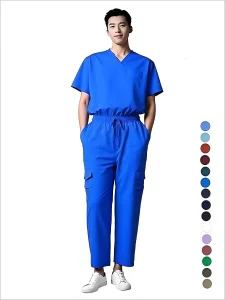
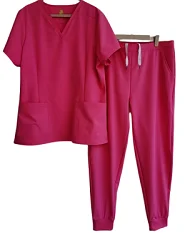
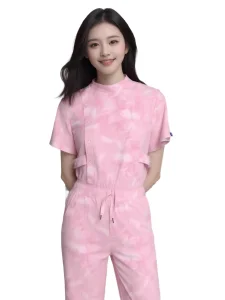
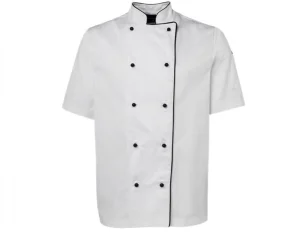
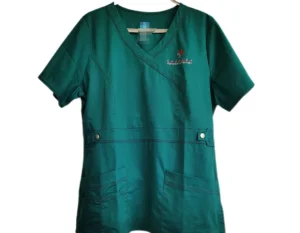
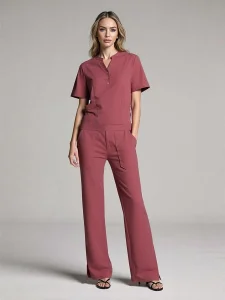
Explore further professional uniform configurations designed by E-SONG apparel to meet international healthcare standards.

 E-SONG APPAREL