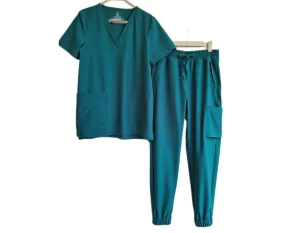
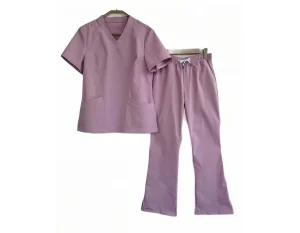
Engineered with antimicrobial technology, multi-dimensional stretch fabrics, and professional styling designed for modern healthcare environments.
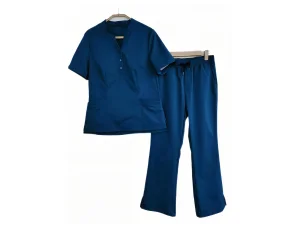
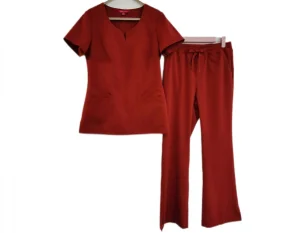

The global healthcare uniform industry is undergoing a structural transition. The traditional V-neck scrub, once the undisputed standard of medical apparel, is losing ground to advanced architectural styles. Among these, collared medical scrubs—specifically mandarin, stand-up, and mock-wrap variations—have emerged as the preferred option for modern clinical facilities. This paradigm shift is driven by the convergence of clinical aesthetics, personal branding, and structural functionality.
In B2B medical procurement, professional presentation has direct psychological impacts on patient trust and institutional authority. Collared scrubs provide a bridge between the clinical ease of standard scrubs and the formal, authoritative look of traditional physician attire. From premium medical spas in Los Angeles to high-throughput surgical centers in Sydney, the adoption of customized, high-density fabric collared tunics indicates a global trend toward elevated professional presence.
Furthermore, from an ergonomic standpoint, high-quality collared tops offer enhanced protection against neck abrasion from equipment straps, optimized thermal regulation in highly air-conditioned hospital wards, and structural reinforcement around neck closures to prevent premature garment failure.

Leveraging digital supply chain management and automated fabric cutting lines to deliver top-tier OEM & ODM medical uniforms globally.
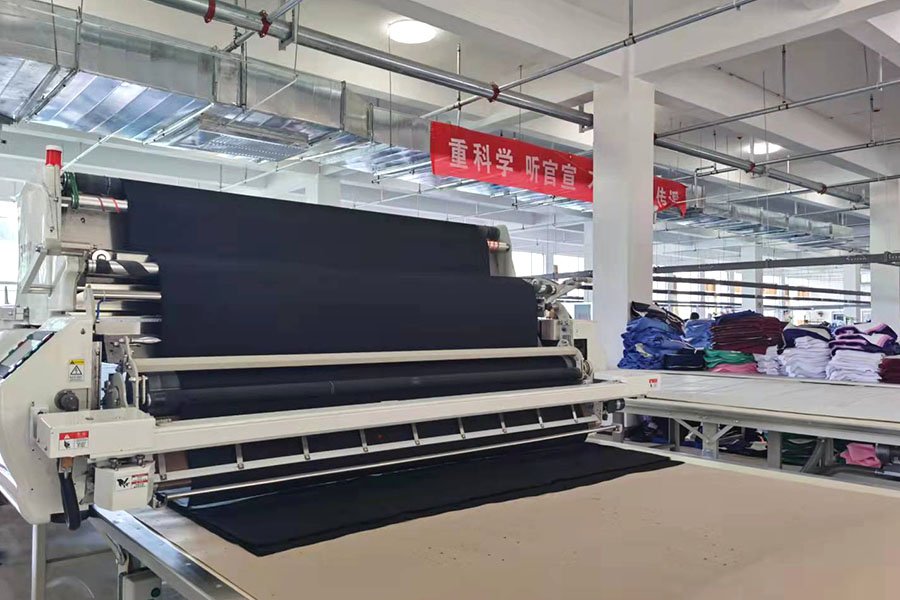
Operating out of Shandong Province, China’s primary textile manufacturing hub, E-SONG Apparel leverages localized industrial clusters to maintain structural cost advantages, rapid fabric sourcing, and optimized transport logistics. Since 2014, our manufacturing infrastructure has catered specifically to the complex quality specifications of the North American and Australian markets.
Our core production facility in Linyi City houses over 120 skilled operators, complemented by two dedicated subcontracted factories aligned under our unified Quality Management System (QMS). By segmenting uniform categories across specialized production lines, we prevent the cross-contamination of material specs and maintain consistent tensile strength, seam structural integrity, and finish tolerances.
Our agile design workflow permits rapid CAD grading and digital patterns, resulting in customized sample generation within three business days. For volume procurement contracts, our streamlined shipping channels out of Qingdao Port guarantee reliable logistics, reducing lead times to 20–45 days depending on the customization scope.
Medical professionals demand textiles that perform under strenuous physical shifts. We engineer medical uniforms utilizing four distinct proprietary material compositions.
Engineered with a high concentration of rayon for an ultra-soft drape that mimics luxury leisurewear, combined with synthetic polyester for durability and elastane for 4-way mechanical stretch. Ideal for premium medical spa tunics and contemporary clinical scrubs.
A high-performance technical fabric featuring excellent moisture-wicking and quick-dry characteristics. Designed for high-stress, high-movement environments like emergency departments and surgical suites where thermal regulation and physical flexibility are critical.
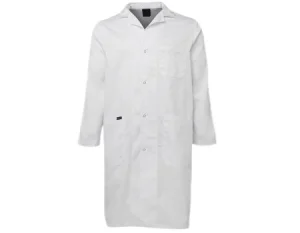
A classic blend of polyester and combed cotton, woven in high-density configurations. This fabric is highly resilient against industrial laundering, autoclave sterilization, and chemical bleaching, making it the industry standard for hospital lab coats and chef uniforms.
Selecting the optimal fabric composition based on durability, chemical resistance, and clinical utility.
| Fabric Type | Material Composition | Weight (GSM) | Best Application | Industrial Wash Resistance | Key Advantage |
|---|---|---|---|---|---|
| TC Poplin / Twill | 65% Polyester, 35% Cotton | 165 - 210 | Lab Coats, Heavy-Duty Scrubs, Chef Uniforms | Outstanding (90°C+) | High tensile strength & chlorine bleaching resistance |
| Poly-Rayon-Spandex | 72% Poly, 21% Rayon, 7% Spandex | 170 - 190 | Premium Collared Tunics, Spa wear | Moderate (60°C) | Silky drape, moisture regulation, luxurious handfeel |
| Poly-Spandex Stretch | 92% Polyester, 8% Spandex | 160 - 180 | Emergency room scrubs, Active scrub pants | Excellent (60°C) | 4-way mechanical stretch, rapid moisture dispersion |
| Poly-Cotton-Spandex | 55% Cotton, 42% Poly, 3% Spandex | 175 - 195 | Chef coats, General clinical utility wear | High (75°C) | Breathability of natural fibers with synthetic durability |
Medical scrub design is not a one-size-fits-all market. Custom uniform demands vary widely across different regions and clinical specialties:
Large-scale hospital groups and medical networks across the US require strict adherence to sizing standards (ASTM guidelines) and unified color-coding systems to distinguish clinical departments. Here, our ability to supply high-volume shipments of standardized, poly-rayon-spandex collared scrubs in deep navy, royal blue, and steel gray enables seamless procurement cycles.
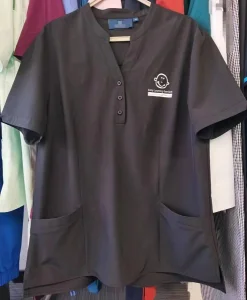
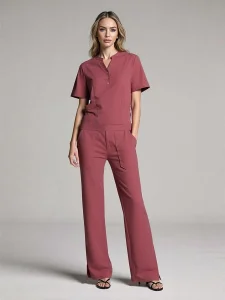
Australian clinics prioritize contemporary styles, breathable fabrics due to regional climates, and minimalist lines. The demand for customized mandarin collar tunics with clean branding details is exceptionally high in these sectors. The high rayon blend content provides the breathability and luxury aesthetic demanded by private practitioners in Brisbane, Sydney, and Melbourne.
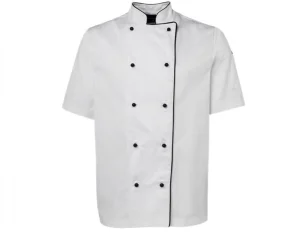
Modern hybrid healthcare facilities frequently merge their clinical hospitality staff and dietary chefs under a unified corporate identity. E-SONG’s capability to manufacture both medical scrubs and specialized gender-neutral chef coats from durable poly-cotton-spandex twills guarantees that procurement departments can manage their entire staff apparel portfolio through a single, qualified supplier.
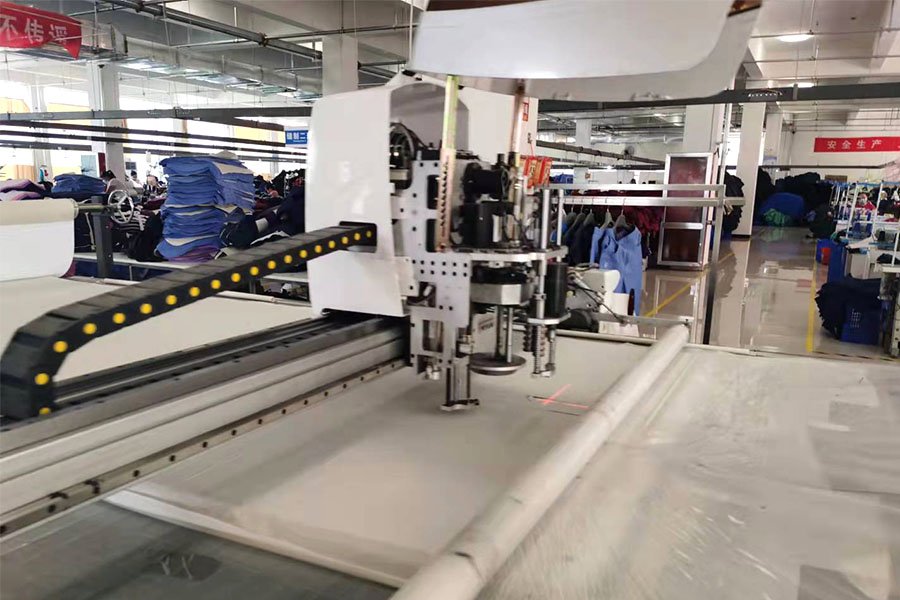
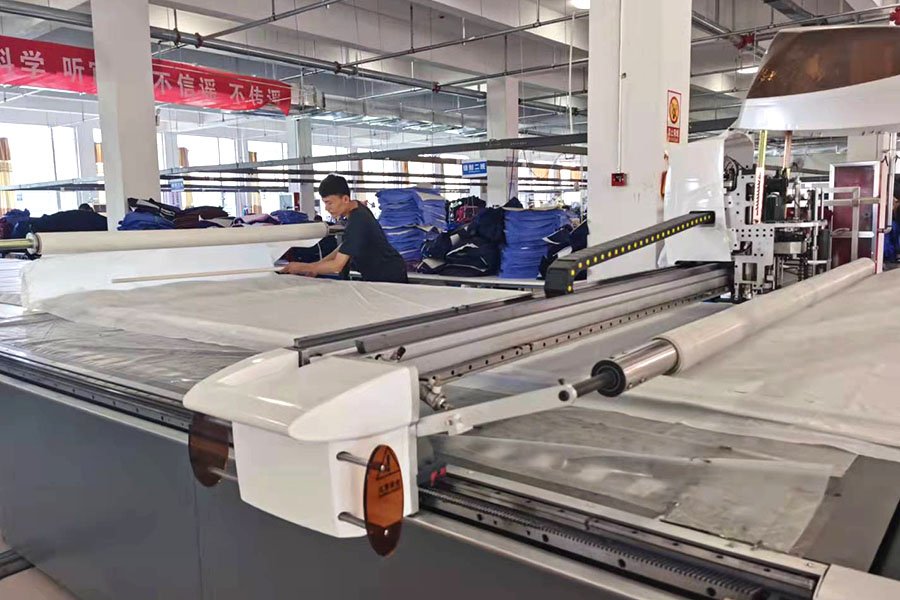
At E-SONG Apparel, we understand that for global distributors and medical apparel brands, a supply chain failure translates to lost contracts and brand erosion. We view quality management not as a final checklist, but as the continuous foundation of our manufacturing lifecycle.
Our quality control program begins at the fiber level. We test raw yarns for shrinkage, colorfastness under chlorine exposure, and pilling resistance before they enter our weaving and dyeing units. During assembly, we implement inline inspections at critical assembly nodes, including pocket reinforcement points, zipper attachments, and collar curves.
By keeping strict production oversight, we ensure that every batch of collared scrub tops, flare-leg scrub pants, and lab coats shipped from our factory maintains the same dimensions and performance properties as the approved pre-production samples. This reliability is why our clients in the US and Australia have maintained partnerships with us for close to a decade.
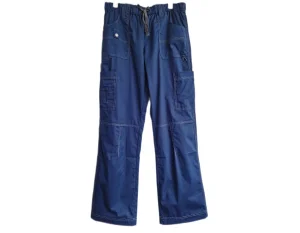
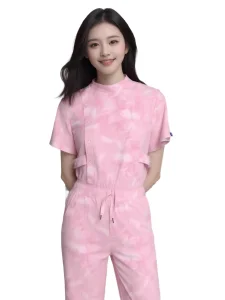
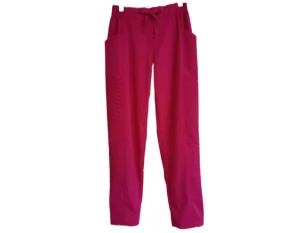
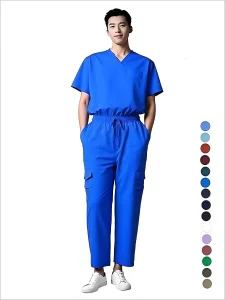
Engineered for maximum utility, featuring specialized pockets, secure drawstrings, and reinforced stitching for demanding clinical shifts.
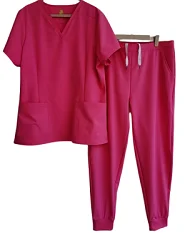
The healthcare uniform industry is moving toward higher technical sophistication. The following developments shape how global procurement managers evaluate medical textile suppliers.
Traditional cotton and basic polyester blends are increasingly replaced by smart polymers. Modern medical settings require quick-dry features, lint-free fabric surfaces, and permanent antimicrobial finishes. Applying silver-ion or organic silane treatments directly during the fiber spinning stage prevents odors and reduces the transmission of pathogens between hospital zones.
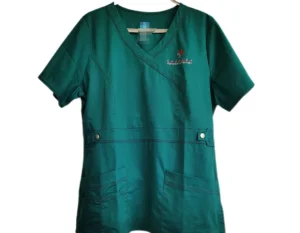
Today’s medical professionals expect comfort levels similar to athletic wear. Uniform patterns must incorporate 4-way stretch fabrics, gusseted underarms, and elasticized, multi-pocket cargo configurations. The integration of mandarin collars, split hems, and tapered-leg fits reflects this demand for modern, athletic utility in medical workspaces.
Environmental policies in North America and Western Europe are pushing healthcare networks to look for sustainable alternatives. Developing scrubs using recycled polyethylene terephthalate (rPET) fibers and biodegradable synthetic matrices allows hospitals to meet environmental compliance targets without sacrificing textile strength or fluid-repellent characteristics.
Find technical answers regarding customization, manufacturing capacities, fabric specifications, and global shipping policies.
 E-SONG APPAREL