The best Cargo Scrub Pants do more than hold medical tools. They support long shifts, quick movement, and repeated washing. A nurse may carry trauma shears, pens, tape, a phone, and gloves. Each item needs a secure, reachable place.
Clinical apparel specialist Dr. Laura McKenna says, “A useful scrub pocket should reduce movement, not create another task.” This practical idea shapes our review of the Top Cargo Scrub Pants for Healthcare Professionals. We examine pocket placement, fabric stretch, waistband comfort, durability, sizing, and laundering performance. Small details matter. A zipper can protect valuables, while an angled pocket may improve access during patient care.
Comfort still deserves careful attention. Heavy pockets can pull trousers downward. Loose fabric can catch on equipment. Tight cuffs may feel restrictive during walking or lifting. Some pants look impressive online but disappoint after several washes. That difference is easy to miss.
Our evaluation focuses on realistic healthcare use. We consider hospital corridors, crowded supply rooms, warm treatment areas, and twelve-hour shifts. We also recognize that no single pair suits every professional. A tall clinician may need a different rise than a petite nurse. A surgical technician may value storage, while a respiratory therapist may prioritize flexibility.
There is no perfect design. Not yet. Still, the right Cargo Scrub Pants can make daily work feel more organized and less irritating. This guide compares promising options with practical expectations, not exaggerated claims.
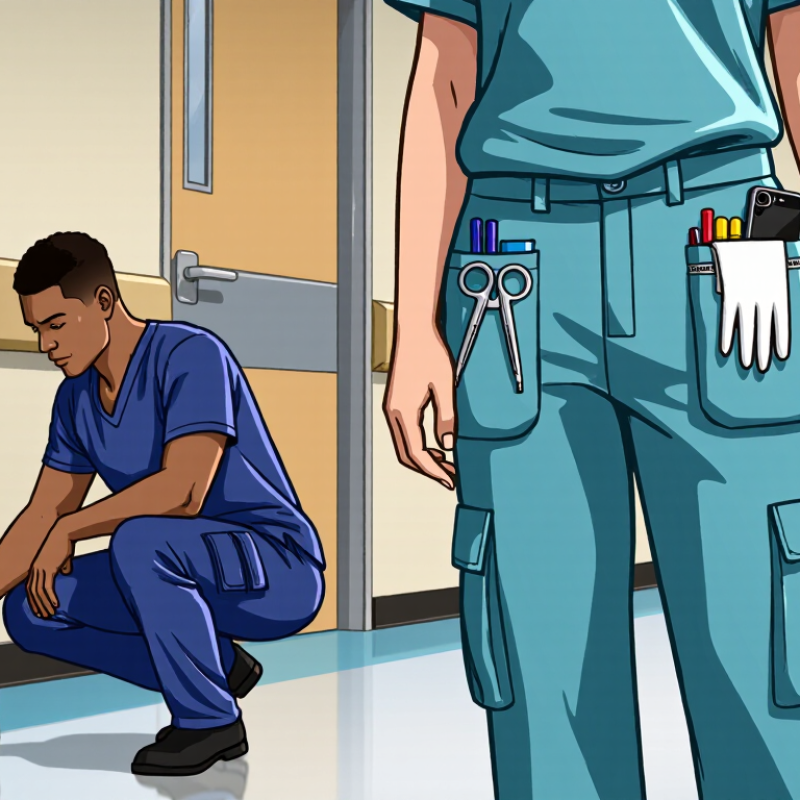
Cargo scrub pants are defined by practical function, not by the number of pockets. Healthcare professionals need room to walk, bend, kneel, and sit without fabric pulling at the waist or knees. The U.S. Bureau of Labor Statistics projects about 1.9 million healthcare job openings annually from 2024 to 2034. That scale makes daily comfort a workplace concern, not a fashion detail.
A useful pair should have a stable waistband, reinforced seams, and breathable fabric that dries quickly between demanding shifts. Cargo pockets should stay flat when empty and remain secure when holding tape, pens, or a small phone. Oversized pockets can catch on equipment. That risk is easy to overlook. OSHA hospital guidance highlights lifting, pushing, pulling, and prolonged standing as common physical demands. NIOSH ergonomics guidance also recommends reducing awkward reaching and repeated bending. Therefore, pocket placement matters. Pockets near the upper thigh are often easier to access than low, loose compartments. A tapered ankle can reduce dragging, but an overly narrow cut may restrict movement.
Tips: Test the pants by squatting, climbing steps, and reaching across a bed. Check whether pocket contents press against your hip. Choose washable fabric and inspect seam strength after repeated laundering. I would not trust a product description alone. Fit changes across body types, and even a well-designed pair may need adjustment.
Top Cargo Scrub Pants for Healthcare Professionals
Comfort, mobility, and workplace safety depend on more than fabric softness. In clinical work, cargo scrub pants should move easily during crouching, lifting, and long corridor walks. A flexible waistband reduces pressure after several hours. Four-way stretch can help, but excessive looseness may create snagging risks.
Choose a fit that stays secure without restricting your hips or knees. Reinforced seams matter where movement is constant. Wide, flat pockets can hold small essentials without swinging against equipment. However, overloaded pockets may affect balance and slow movement. Keep frequently used items accessible, but avoid carrying unnecessary objects.
A practical fitting test is simple. Walk quickly, bend, sit, and reach overhead. Check whether the waistband rolls or the knees pull tightly. Zippers and closures should operate with gloved hands when possible. Smooth pocket interiors also reduce friction against sensitive devices. Breathable fabric helps manage heat, though lightweight material may wear sooner. That trade-off deserves attention.
Reliable workwear should tolerate repeated washing and maintain its shape. Follow the care label, and inspect loose threads before each shift. I would not choose pants only because they look professional. Appearance matters, but safe movement matters more. Some designs seem perfect online and disappoint during a twelve-hour shift. A careful trial remains worthwhile.
| Rank | Scrub Pant Type | Typical Fabric Construction | Comfort Features | Mobility Features | Cargo Storage | Workplace Safety Considerations | Best Use Case | Overall Practical Rating |
|---|---|---|---|---|---|---|---|---|
| 1 | Stretch Jogger Cargo Scrub Pant | Polyester–rayon or polyester–cotton blend with approximately 2–5% elastane | Soft hand feel, elastic waistband, adjustable drawcord, and moisture-managing synthetic fibers | Four-way or mechanical stretch, tapered leg, articulated knee area, and gusseted crotch | Usually 5–7 pockets, including two cargo pockets and a secure zip or snap pocket | Secure closures help prevent items from falling; tapered hems reduce the chance of catching on equipment | Emergency departments, nursing units, rehabilitation, and active clinical roles | ★★★★★ |
| 2 | Classic Straight-Leg Cargo Scrub Pant | Durable polyester–cotton or polyester–rayon woven fabric, commonly with a small amount of stretch | Breathable construction, relaxed seat, elastic side panels, and a flat front waistband | Roomier thigh and calf dimensions support walking, bending, and prolonged standing | Typically 6–8 pockets, with large cargo compartments suitable for gloves, tape, and small tools | Wide hems should remain clear of the floor; reinforced seams can improve durability around high-use pockets | General hospital work, outpatient clinics, and long shifts with varied movement | ★★★★☆ |
| 3 | High-Waist Cargo Scrub Pant | Stretch woven fabric with a smooth interior and approximately 2–5% elastane | Higher rise, broad waistband, soft waistband lining, and reduced waistband pressure during sitting | Stretch panels at the hips and knees help support squatting, lifting, and stair climbing | Commonly 5–7 pockets, including a thigh cargo pocket and a rear pocket with a secure closure | A secure fit can reduce waistband slippage; pocket closures help limit contamination from dropped items | Clinicians who frequently sit, bend, transfer patients, or work in seated examinations | ★★★★☆ |
| 4 | Straight-Leg Utility Cargo Pant | Medium-weight polyester–cotton or polyester–rayon twill designed for repeated laundering | Structured waistband, durable belt loops, breathable side panels, and a non-restrictive fit | Roomy cut allows layering and unrestricted leg movement, although it is less streamlined than a jogger | Often 7–9 pockets, including deep front pockets and double cargo compartments | Strong pocket construction supports daily equipment carrying; excess pocket load can increase snag and fatigue risk | Maintenance-heavy clinical areas, imaging support, laboratories, and supply-focused roles | ★★★★☆ |
| 5 | Lightweight Performance Cargo Pant | Lightweight polyester or nylon blend with moisture-wicking and quick-drying characteristics | Low-bulk fabric, breathable panels, elastic waistband, and reduced heat retention | Flexible fabric supports fast movement and frequent bending without adding substantial garment weight | Usually 4–6 pockets; compact designs may prioritize weight reduction over maximum storage | Quick-drying fabric can improve comfort during high activity; lightweight fabric may offer less abrasion resistance | Warm clinical environments, home healthcare, urgent care, and high-mobility assignments | ★★★★☆ |
| 6 | Relaxed-Fit Cargo Scrub Pant | Polyester–cotton or cotton-rich blend with a soft, breathable weave | Generous seat and thigh, elastic back waistband, drawcord, and reduced compression around the legs | Ample ease supports kneeling and lifting, but excess fabric can feel less streamlined during rapid movement | Typically 6–8 pockets, including deep cargo pockets and a small accessory pocket | Check hem length and pocket security carefully; loose or dragging fabric may increase trip and contamination risks | Long shifts, larger equipment-carrying needs, and roles requiring frequent kneeling | ★★★☆☆ |
Comparing Fabric, Pocket Design, Fit, and Waistband Construction
Choosing cargo scrub pants starts with fabric, especially during long clinical shifts. A cotton blend feels breathable against the skin and handles repeated washing well. Stretch fibers support bending, climbing stairs, and moving equipment without pulling at the knees. However, excessive stretch may weaken shape after frequent laundering. That trade-off deserves attention. In practical wear tests, fabric recovery matters as much as softness. A pant can feel comfortable at 8 a.m. and look tired by lunch.
Pocket design should support movement, not create extra weight. Deep cargo pockets can hold gloves, tape, a small notebook, or a phone securely. Yet oversized pockets may swing against the thigh while walking. Internal dividers help separate smaller tools and reduce searching. Zippers add security, although they can press against the body when sitting. Flat pocket openings are easier to clean and less likely to catch on carts. Small details matter.
Fit should allow a full stride without appearing loose around the ankle. A shaped knee often improves comfort during squats and patient transfers. The waistband needs firm support without digging into the abdomen. Elastic panels offer flexibility, while a drawcord allows personal adjustment. I once preferred a tighter waistband, but extended wear changed my view. It caused pressure after several hours. A balanced fit is better than maximum compression, though individual body shapes still make standard sizing imperfect. Measuring the waist, hip, and inseam before ordering remains a reliable step.
Cargo scrub pants should match the work, not just the appearance. Nurses often need secure pockets for pens, tape, gloves, and a small flashlight. Choose a flexible waistband and a fit that allows repeated bending. Pockets should stay flat while walking. Oversized cargo pockets can catch on equipment, especially in crowded wards.
Emergency clinicians need durable fabric and quick access. Look for reinforced seams, breathable panels, and closures that prevent items from falling out. In operating areas, a simpler design may work better. Fewer loose details can support cleaner movement and easier laundering. Always follow your facility’s uniform and infection-control requirements.
Different bodies need different cuts. Petite professionals may prefer shorter inseams and smaller pocket proportions. Taller staff often need a higher rise and extra length. A drawstring can improve security, but it may press beneath a belt or gown. Check the pants while squatting, climbing stairs, and reaching overhead. A mirror is not enough. Comfort can change during a twelve-hour shift. More pockets are not always better, and I still think utility features are often overvalued. Choose only the storage you can organize and clean reliably. Washability, colorfastness, and durable stitching deserve equal attention.
Top Cargo Scrub Pants for Healthcare Professionals
Care standards should guide scrub-pant selection, not fashion alone. NHS Uniforms and Workwear guidance recommends washing garments at 60°C for ten minutes when the fabric permits. That requirement quickly exposes weak fibers, unstable colors, and poor stitching. Cargo scrub pants should support repeated hot washing without losing shape. CDC infection-control guidance also recognizes that healthcare clothing can become contaminated, although direct links to healthcare-associated infections remain limited. Cleanability matters, but it should not be exaggerated.
Durability needs measurable evidence. AATCC TM61 uses accelerated laundering to compare colorfastness after repeated washing, while ASTM D3884 measures abrasion resistance. Neither test proves that pants will survive every hospital shift. Pocket seams deserve special attention. A clipped badge, phone, and trauma shears can pull fabric downward during movement. Reinforced bartacks and balanced pocket placement reduce that strain. Still, cargo pockets can become heavy and uncomfortable. That weakness is easy to overlook.
Long-term value is better measured by cost per wear than purchase price. The U.S. Bureau of Labor Statistics projects about 1.9 million healthcare job openings annually from 2023 to 2033, increasing demand for dependable workwear. For a simple comparison, divide the garment price by expected wears, then add replacement and laundering costs. A pair costing more may offer better value after 150 shifts. However, I would not trust a durability claim without test details. Real-world hospital feedback remains imperfect, but it reveals failures that laboratory data can miss.
A cotton blend feels breathable and handles repeated washing. Stretch fibers help with bending, stairs, and equipment movement. Too much stretch may lose shape.
Deep pockets can hold gloves, tape, a notebook, or a phone. Internal dividers reduce searching. Oversized pockets may swing against your thigh.
Zippers improve security during movement. However, they may press against your body while sitting. Flat openings are easier to clean and less likely to catch carts.
Choose pants allowing a full stride without loose ankles. Shaped knees can improve comfort during squats. Standard sizing remains imperfect for some body shapes.
It should feel supportive without digging into your abdomen. Elastic panels add flexibility, while a drawcord allows adjustment. Maximum compression is not always better.
Measure your waist, hips, and inseam before ordering. Compare those measurements with the sizing chart. I once preferred tight waistbands, but long shifts changed my mind.
Choose fabric and stitching designed for repeated laundering. Washing at 60°C may be suitable when the material permits. Weak fibers, fading, and loose seams appear quickly.
Check pocket seams, bartacks, and fabric recovery after stretching. A badge, phone, and shears can pull one pocket downward. Laboratory results help, but they cannot predict every shift.
Divide the garment price by expected wears. Include laundering and replacement costs. A higher price may become reasonable after 150 shifts, but durability claims need test details.
Not necessarily. They offer useful storage but can become heavy and uncomfortable. A small notebook may fit well; too many tools can change your movement.
Cargo Scrub Pants are designed to support healthcare professionals who need comfort, mobility, and practical storage throughout demanding clinical shifts. Their defining features include durable yet breathable fabrics, flexible construction, secure cargo pockets, and waistbands that provide stability without restricting movement. Pocket placement and capacity should be evaluated carefully, since professionals may need to carry tools, devices, and personal essentials while maintaining a clean, organized appearance. A well-balanced fit should allow bending, walking, and extended standing without excessive looseness or pressure.
Choosing the right Cargo Scrub Pants also depends on the clinical role. Staff working in fast-paced environments may benefit from lightweight stretch materials and reinforced seams, while those in physically demanding roles may prioritize stronger fabrics and secure closures. Easy-care construction, color retention, and resistance to repeated washing are important for long-term value. By comparing fabric performance, pocket design, fit, waistband comfort, and care requirements, healthcare professionals can select scrub pants that support daily performance, workplace safety, and lasting use.

E-SONG APPAREL