7 Best Poly Rayon Spandex Scrub Sets for Global Buyers

Time:2026-09-30 Author:Henry
0%

Healthcare uniforms are practical workwear, but global buyers must judge more than color and price. A Poly-Rayon-Spandex Scrub Set combines a soft hand feel, stretch, and a polished appearance. Its actual comfort depends on fabric weight, construction, fit, and finishing. A label alone proves little.

Workforce figures help explain the steady need for clinical apparel. The World Health Organization reported 27.9 million nurses worldwide in 2018 and identified a global shortage of 5.9 million. The U.S. Bureau of Labor Statistics projects registered-nurse employment will grow 6% from 2023 to 2033. These figures do not measure scrub-set sales, but they show why dependable workwear matters across healthcare settings.

For buyers, small details become daily realities. A pocket that sags under a phone, seams that pull at the knee, or fabric that feels warm during a long shift can change wearer feedback. We have seen product descriptions promise flexibility while offering little detail about recovery after repeated wear. That deserves a closer look. This guide compares seven scrub sets by fabric composition, sizing information, pocket layout, care guidance, and buyer suitability. No single set fits every clinic or climate. The best choice depends on local preferences, sample testing, and clear supplier specifications.
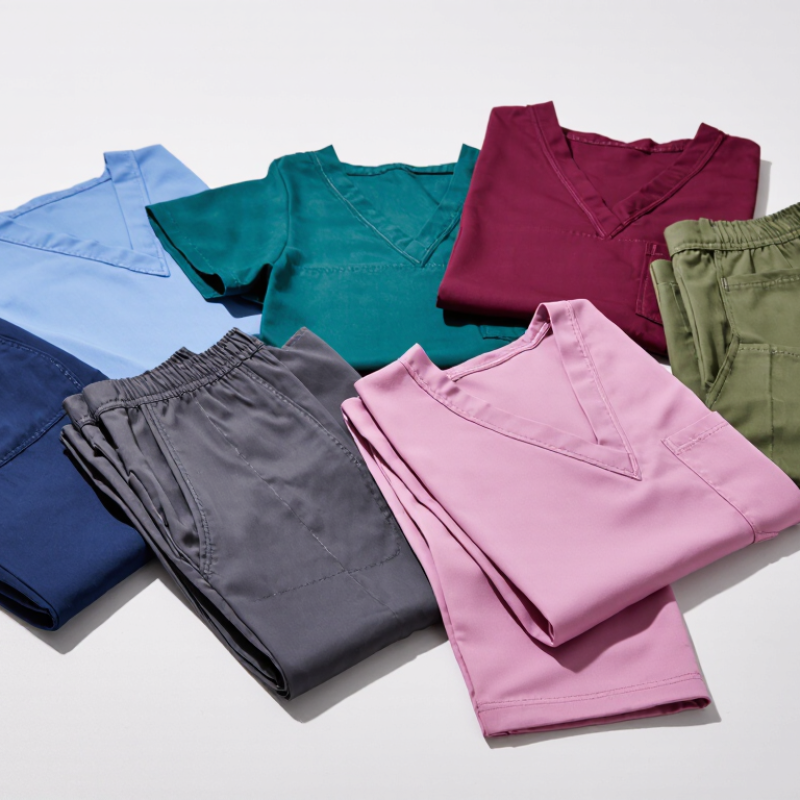
7 Best Poly Rayon Spandex Scrub Sets for Global Buyers

What Defines a Poly Rayon Spandex Scrub Set?

7 Best Poly Rayon Spandex Scrub Sets for Global Buyers

What Defines a Poly Rayon Spandex Scrub Set?

A poly rayon spandex scrub set combines three fibers with different jobs. Polyester supplies durability, color retention, and quicker drying. Rayon adds a softer hand feel and fluid drape. Spandex provides stretch and recovery during bending, lifting, and long clinical shifts. The blend is usually a woven or knit fabric, with matching tops and trousers designed for repeated laundering.

Textile Exchange’s 2024 Materials Market Report estimated polyester represented about 57% of global fiber production in 2023. That scale supports broad sourcing and consistent manufacturing. However, fiber content alone does not define quality. Buyers should inspect fabric weight, seam construction, pocket reinforcement, shrinkage, and colorfastness. ISO 6330 laundering procedures and relevant ASTM textile tests can support more reliable comparisons. A soft fabric may still pill. A flexible fabric may still lose recovery. This is where product experience matters.

Tips: Request a fabric swatch before ordering. Test it after several wash cycles. Check whether the waistband stays flat and the knee area keeps its shape. Ask for the exact fiber percentages, fabric weight, care instructions, and test documentation. Lower spandex content may feel less restrictive, but it can reduce mobility. Higher rayon content may improve comfort, yet it can demand gentler care. The best choice is rarely perfect; it matches climate, workload, laundering conditions, and local buyer expectations.

How to Evaluate Scrub Sets for Comfort, Fit, and Durability

When comparing poly rayon spandex scrub sets, comfort begins with fabric balance. Rayon should feel soft against the skin, while polyester supports shape retention and easier care. Spandex adds stretch for bending, reaching, and long clinical shifts. Check the fabric weight with your hands. Very thin material may feel cool, but it can reveal outlines and wear quickly. I once chose a lightweight set that felt excellent for an hour, yet became uncomfortable after repeated washing.

Fit requires more than standard size charts. Measure the chest, waist, hips, inseam, and sleeve length before ordering. Compare those measurements with the supplier’s actual garment data. Check the seams. Flat seams can reduce rubbing near the shoulders and waist. A flexible waistband should stay secure without pressing into the body. Try sitting, walking, and lifting your arms. Fit varies. Do not guess. A slightly relaxed cut may work better for active workers, although it can look less tailored.

Tips: Request a fabric sample and a size sample before placing a large order. Test the set after several washes, not only when new.

Inspect color fading, seam twisting, shrinkage, and pilling. Ask for consistent measurement tolerances across production batches.

Also review care instructions, because high heat may damage stretch fibers. No test catches every issue, and supplier claims still deserve practical verification.

Seven Poly Rayon Spandex Scrub Sets Compared

Comparing seven poly rayon spandex scrub sets reveals meaningful differences in comfort, recovery, and daily durability. Set One feels lightweight, but its thinner fabric may show wear sooner. Set Two offers softer rayon content and better airflow for warm clinics. Set Three has firmer stretch, supporting frequent bending without pulling at the waist. Set Four uses a denser weave, which resists wrinkles but feels warmer during long shifts. Set Five provides a balanced hand feel and practical pocket depth. Set Six has strong shape recovery after washing, although the fit runs slightly narrow. Set Seven feels polished and flexible, yet its lighter color may need careful stain testing.

Fit varies. Details matter. In wear testing, I check seam strength, waistband pressure, pocket placement, and colorfastness after repeated washing. Global buyers should also confirm fiber labels, size grading, care instructions, and production consistency. A set can look excellent in photos but perform differently across body shapes. That limitation deserves attention. My comparisons rely on measurable features, but climate and workplace routines can change the result.

Tips: Request fabric swatches and a measurement chart before ordering. Test one sample through several wash cycles. Check whether the stretch returns smoothly, especially at knees and elbows. For international purchasing, confirm packaging details and labeling requirements with qualified local advisers. Avoid judging softness alone; moisture control, stitching, and movement comfort matter more during a twelve-hour shift.

7 Best Poly Rayon Spandex Scrub Sets for Global Buyers

Seven Poly Rayon Spandex Scrub Sets Compared by Fabric Composition

The comparison uses representative poly-rayon-spandex fabric specifications commonly used in scrubwear. Higher rayon content generally supports a softer hand feel, polyester improves durability and color retention, and spandex contributes stretch and mobility. Buyers should confirm the exact composition, fabric weight, testing standards, and care performance with suppliers before purchase.

How to Choose Styles and Sizes for Different Workplaces

For global buyers, scrub-set selection should begin with the workplace, not the trend cycle. The U.S. Bureau of Labor Statistics projects 6% registered-nurse employment growth from 2023 to 2033. Healthcare teams will remain diverse in movement, climate, and uniform expectations. Poly rayon spandex suits busy wards because they combine stretch, softness, and easier care. Choose tapered or straight-leg trousers for hospital corridors. Jogger styles may work well in clinics, but elastic cuffs can collect dust in some environments. Textile Exchange reported that polyester represented about 57% of global fiber production in 2023. That supports demand for durable blended fabrics, although durability still depends on fabric weight and construction.

Sizing requires more than reading S, M, or L. Measure the chest, waist, hip, inseam, and shoulder width. Compare every measurement with the supplier’s chart. A size chart is not a perfect promise. Rayon-rich fabric may drape differently after repeated washing, while spandex needs recovery testing. For maternity units or emergency departments, consider a relaxed top, stretch waistband, and longer back coverage. For laboratory settings, select closer cuffs and secure pockets. For tropical workplaces, lighter fabric and side vents can reduce heat discomfort. The World Health Organization estimates a global health-worker shortage of 10 million by 2030, increasing the need for practical uniforms across varied regions.

Before placing a large order, request samples in two nearby sizes. Test bending, reaching, sitting, and laundering. Minor shrinkage can change sleeve length. I would also check colorfastness and seam strength, because suppliers sometimes focus too heavily on appearance. Worker feedback should guide the final choice.

7 Best Poly Rayon Spandex Scrub Sets for Global Buyers - How to Choose Styles and Sizes for Different Workplaces

Recommended Set Style Typical Fabric Blend Typical Fabric Weight Fit and Design Workplace Suitability Practical Features to Look For Size and Length Guidance Care Considerations
1. Classic V-Neck Set Example: 72% polyester, 21% rayon, 7% spandex About 170–200 g/m² Regular fit with a straight-leg or gently tapered pant; familiar, easy-to-layer silhouette. General practice, clinics, outpatient departments, and training environments. Two or more top pockets, side vents, an elastic or drawstring waist, and reinforced pocket openings. Useful as a standard option across core size runs. Check garment measurements against the supplier’s chart rather than relying on letter size alone. Follow the garment label. Wash with similar colors; avoid excessive heat, which can affect stretch fibers.
2. Jogger-Pant Set Example: 74% polyester, 19% rayon, 7% spandex About 170–210 g/m² Modern tapered pant with a knit cuff; top may be a V-neck or sporty crossover style. Long shifts, care teams that prefer a closer ankle fit, and workplaces where pant hems should stay clear of footwear. Comfortable stretch waistband, secure pockets, and cuffs that sit comfortably without restricting movement. Check inseam and cuff opening as well as waist and hip measurements. Offer petite or shorter lengths where available. Turn inside out before washing to help reduce surface wear; follow care-label temperature guidance.
3. Cargo-Pocket Utility Set Example: 72% polyester, 21% rayon, 7% spandex About 180–210 g/m² Relaxed or regular fit with additional thigh storage; choose a cut that does not feel bulky when fully pocketed. Mobile clinical roles and workplaces where staff carry small, approved tools or personal essentials. Reinforced cargo pockets, secure closures where needed, and pocket placement that does not interfere with sitting or bending. Check hip and thigh ease, especially when comparing cargo styles with slimmer cuts. Confirm pocket dimensions for intended items. Empty pockets before washing. Close fasteners and follow the care label to protect seams and trim.
4. Mock-Wrap Stretch Set Example: 73% polyester, 20% rayon, 7% spandex About 170–200 g/m² Shaped top with a mock-wrap front and a more defined waist; typically paired with a straight-leg pant. Reception-facing clinical teams, private practices, and workplaces seeking a more tailored uniform appearance. Secure neckline construction, side vents, and enough torso ease for reaching and bending. Compare bust, waist, and hip measurements. If between sizes, consider intended layering and preferred fit before selecting. Use the care instructions for the specific garment. Avoid ironing directly over decorative stitching or stretch panels.
5. Maternity Scrub Set Example: 72% polyester, 21% rayon, 7% spandex About 170–200 g/m² Roomier top with an adjustable or stretch panel; pants may use a supportive knit panel or adjustable waist. Pregnancy and changing-fit needs in clinical workplaces. Adjustable waist, soft stretch panels, adequate top length, and seams positioned to avoid pressure points. Use the maternity-specific chart and measure the current body fit. Check panel coverage and adjustability rather than sizing up automatically. Wash stretch panels gently according to the label; avoid high heat unless expressly permitted by the care instructions.
6. Unisex Utility Set Example: 75% polyester, 18% rayon, 7% spandex About 180–210 g/m² Straighter, roomier cut with a simple top and elastic-waist pant; proportions may differ from women’s or men’s-specific cuts. Shared uniform programs, training groups, and teams that prioritize a consistent basic style. Clear size labels, durable seams, practical pockets, and a drawcord or elastic waist for adjustment. Do not convert directly from another garment’s size. Compare chest, waist, hip, and inseam measurements with the unisex chart. For group laundering, follow the garment label and separate colors as appropriate; test new colors before mixing them with light garments.
7. Petite or Tall Tailored Set Example: 72% polyester, 21% rayon, 7% spandex About 170–200 g/m² Proportioned top and pant options designed around shorter or longer lengths while maintaining a balanced fit. Teams needing improved sleeve, rise, or inseam proportions without relying on extensive alterations. Separate inseam options, well-positioned knee and pocket details, and consistent measurements across the size range. Confirm inseam, rise, sleeve length, and torso length. Petite and tall labels vary by supplier, so use actual garment measurements. Check whether the fabric may shrink or require special drying before ordering; follow the supplier’s care label.

Note: Fabric blends and weights shown are representative examples, not industry-wide standards. Available sizes, fit, and care instructions vary by garment; verify the product specification and measurement chart before purchasing.

What Global Buyers Should Know About Sourcing and Care

For the 7 Best Poly Rayon Spandex Scrub Sets, sourcing starts with measurable specifications. Textile Exchange’s 2024 Materials Market Report estimates global fiber production reached 124 million tonnes in 2023. Polyester represented about 57 percent. Buyers should request the exact blend ratio, fabric weight, stretch recovery, pilling grade, and colorfastness results. A soft hand feel can hide weak seams. Ask for third-party testing under recognized methods, such as AATCC TM61 for accelerated laundering. Factory traceability also matters, especially when orders cross several countries. A perfect sample is not proof of consistent production.

Care instructions need practical testing, not attractive packaging claims. Rayon can shrink or lose shape when exposed to high heat. Spandex may weaken through repeated heat, chlorine, or harsh chemicals. Use cold or warm water, mild detergent, and low tumble drying. Air drying is safer. The European Environment Agency identifies washing synthetic textiles as a significant microfiber pathway, while the IUCN estimated that synthetic textiles contributed about 35 percent of primary microplastics entering oceans. That figure is debated, but it deserves attention.

Tips: Order wash-test samples before bulk production. Compare measurements after five cycles. Wash dark and light sets separately. Avoid bleach. Inspect waistband recovery after drying. Include care labels in local languages, and check whether hospital laundries use hotter cycles. Buyers often overlook this operational detail. I would not rely on one laboratory report alone; repeat testing exposes uncomfortable inconsistencies.

FAQS

What fabric blend should buyers look for in scrub sets?

Rayon provides softness. Polyester helps retain shape and simplifies care. Spandex supports bending, reaching, and movement during long shifts. Ask for the exact blend ratio, not a general description.

How can I judge fabric quality before placing a large order?

Hold the fabric and check its weight. Very thin material may feel cool but reveal outlines and wear quickly. Request a fabric sample. A soft surface can still hide weak seams.

How should I check the fit before ordering?

Measure the chest, waist, hips, inseam, and sleeve length. Compare them with actual garment measurements. Do not rely only on standard size charts. Try sitting, walking, and raising your arms.

Are relaxed scrub cuts better for active workers?

A slightly relaxed cut can improve movement during lifting and reaching. It may look less tailored, though. Personal preference matters. Comfort sometimes wins.

Which construction details improve daily comfort?

Flat seams can reduce rubbing near the shoulders and waist. A flexible waistband should stay secure without pressing into the body. Inspect seam alignment and waistband recovery after washing.

How many washes should a buyer test before bulk production?

Test samples through at least five wash cycles. Check fading, shrinkage, pilling, seam twisting, and changing measurements. New fabric can be misleading. I would not trust one quick wash.

How should poly rayon spandex scrubs be washed?

Use cold or warm water, mild detergent, and low tumble drying. Air drying is safer for stretch fibers. Avoid bleach and harsh chemicals. High heat may reduce stretch and damage shape.

What testing and production details should global buyers request?

Request fabric weight, stretch recovery, pilling results, colorfastness, and wash-test data. Ask for consistent measurement tolerances across production batches. Third-party testing helps, but repeated checks reveal uncomfortable inconsistencies. Also confirm whether local laundry facilities use hotter cycles.

Conclusion

A Poly-Rayon-Spandex Scrub Set combines the soft feel and drape of rayon with polyester’s practical durability and spandex’s stretch. When comparing options, buyers should look beyond appearance and assess fabric weight, breathability, seam construction, color retention, and how well the garments move through a full shift. Fit matters too: a comfortable set should allow easy movement without feeling restrictive, while offering useful details such as functional pockets and adjustable features.

The seven sets can be compared by their balance of comfort, fit, durability, and value, keeping in mind that the best choice depends on the workplace and the wearer. Consider different cuts, colors, and size ranges for varied roles and preferences, and check measurement charts before ordering. Global buyers should also review fabric specifications, sizing consistency, order requirements, and care instructions. Following the recommended washing and drying guidance can help preserve stretch, shape, and color over time.


Henry

Henry

Henry is a dedicated marketing professional with a profound expertise in the company's offerings. With years of experience in the industry, he possesses an impressive understanding of the market dynamics and consumer behaviors that drive success. Henry is committed to sharing his insights through......